
LESSONS: TEN THINGS TO THINK ABOUT
EYES
Fundamental Principles for Animating Eyes
Eyes as Windows to the Soul
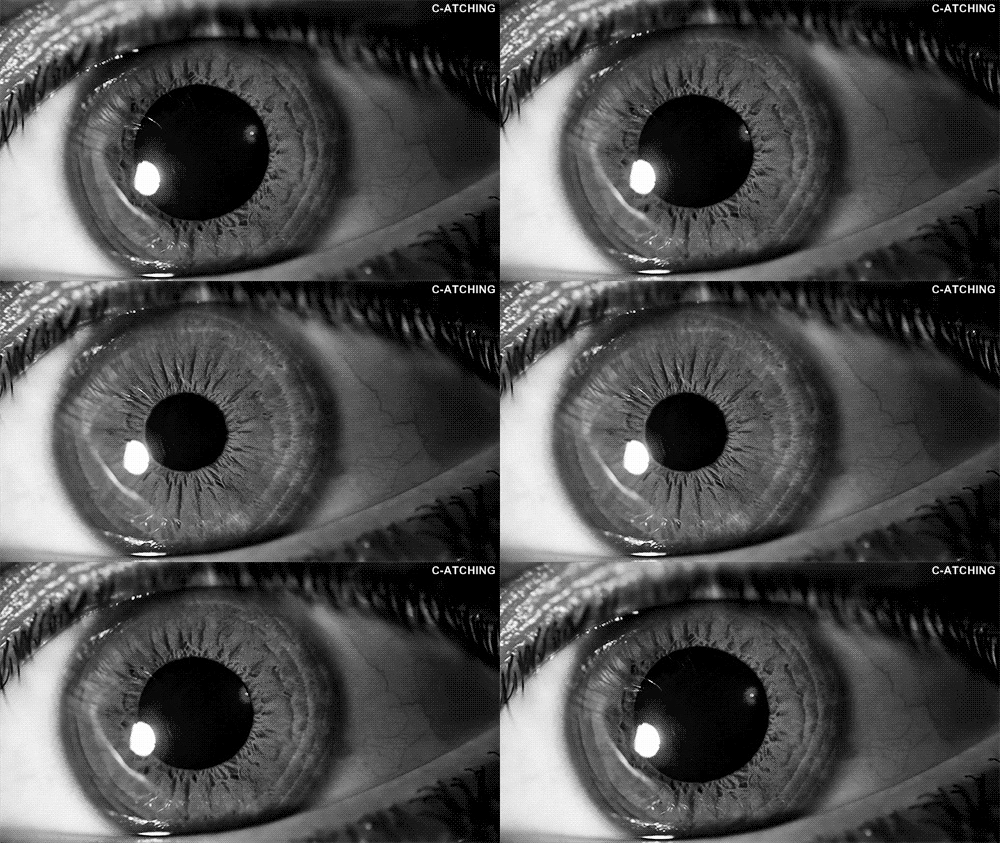
The eyes reveal what the character is thinking and feeling. They are driven by the mind, not by mechanics alone. Before animating the eyes, understand the character's internal state. Thought always precedes movement.
The Significance of Eye Movement
Small eye movements often communicate more than large body gestures. Eye darts, glances, and holds provide direct insight into a character's intent, curiosity, suspicion, or hesitation. These subtle shifts are powerful storytelling tools.
Portraying Desire Through the Eyes
Desire is frequently expressed through the eyes, even when buried beneath subtext. A character may verbally deny what they want, but the eyes often reveal the truth. Long holds, repeated glances, or delayed look-aways can expose inner conflict and longing.
Purposeful Eye Motion
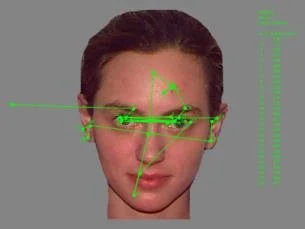
Every eye movement should have intent. Avoid random or constant motion. Ask why the character looks where they do and what they expect to gain from it. Study real eye behavior and observe natural patterns, including the Social Triangle, where focus shifts between the right eye, left eye, and mouth during conversation.
Eye Shape, Lids, and Brows
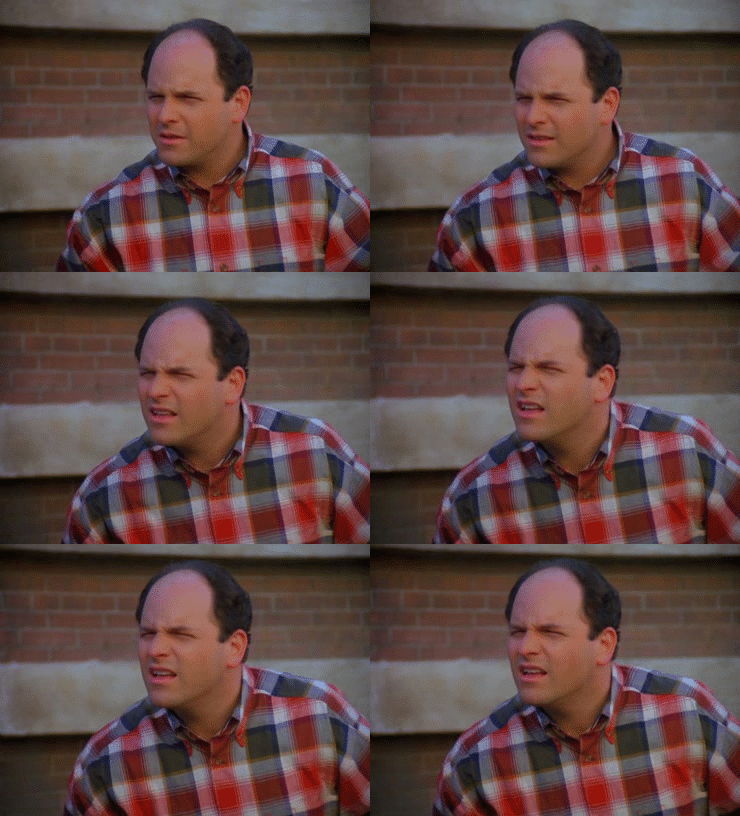
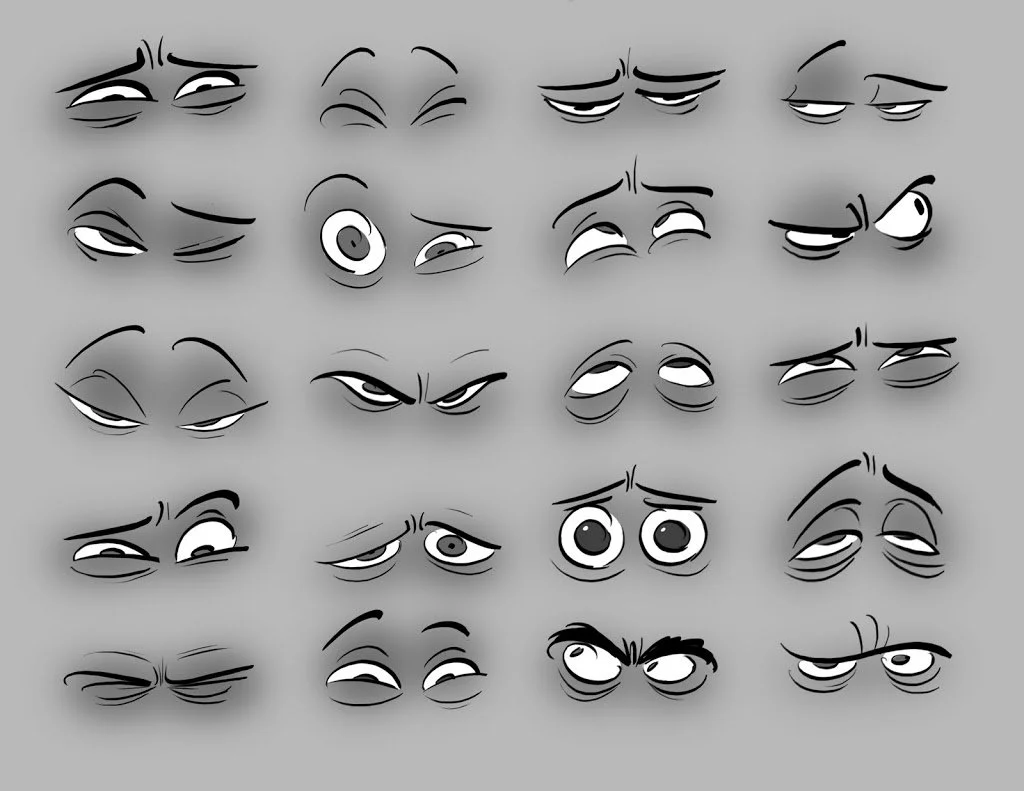
Eye Animation is not just about moving the iris. As the eye shifts direction, its shape changes. Lid position adjusts based on eye line and emotional state. Brows add pressure and intent, reinforcing expression. Lid movement should support both eye direction and emotion, not lag behind unintentionally.
Key Takeaway
Strong eye Animation comes from clarity of thought. When the eyes move with purpose, they anchor performance, reveal subtext, and connect the audience directly to the character's inner world.
Gaze and Tilt of the Head
How Head Angle Supports Eye Direction and Intent
Gaze does not exist in isolation. The direction of the eyes and the tilt of the head work together to communicate thought, attitude, and emotional intent. When these elements align, the performance feels intentional and readable. When they conflict without purpose, the acting feels confusing or artificial.
Relationship Between Eyes and Head
The eyes usually move first. The head follows when the thought requires commitment, emphasis, or clarity. Small eye movements suggest internal processing or curiosity. When the head joins the motion, it signals that the character has made a decision or wants to be seen.
A character who looks with only the eyes appears cautious, guarded, or unsure. A character who turns both eyes and head together appears confident or confrontational.
Meaning Behind Head Tilt
Head tilt is an expressive tool that subtly communicates attitude.
A slight tilt can suggest curiosity, empathy, interest, or uncertainty. A downward tilt with eyes looking up can read as vulnerability or hesitation. An upward tilt with eyes looking down can suggest superiority, dismissal, or control.
Head tilt should never be neutral by accident. Even a small angle choice influences how the audience reads the character.
Gaze Direction and Power
Who looks at whom, and from what angle, establishes power dynamics.
Looking up at another character often reads as deference or fear. Looking down reads as authority or judgment. Side glances can imply skepticism, secrecy, or internal conflict.
Breaking eye contact is just as meaningful as holding it. A character who refuses to look at someone may be protecting themselves emotionally or avoiding the truth.
Eye Line Versus Head Line
Avoid locking the eyes and head into perfectly aligned motion unless the character is rigid, robotic, or emotionally closed. Natural performance includes offset.
For example, the eyes may arrive first, then the head settles into alignment. Or the head may turn while the eyes lag slightly behind, revealing reluctance or resistance.
This offset adds life and believability.
Practical Animation Notes
Use eye movement for thought and head movement for intention.
Keep head tilts subtle unless the story calls for exaggeration.
Check silhouettes. The head angle should be clearly visible from a distance.
Avoid symmetrical head positions for long periods. Symmetry flattens performance.
Let gaze lead action. The audience follows where the character looks.
Key Takeaway
Gaze tells us what the character is thinking about. Head tilt tells us how they feel about it. When both are designed with intent, the performance gains clarity, emotion, and subtext.