
LESSONS: TEN THINGS TO THINK ABOUT
SUBTEXT
Subtext
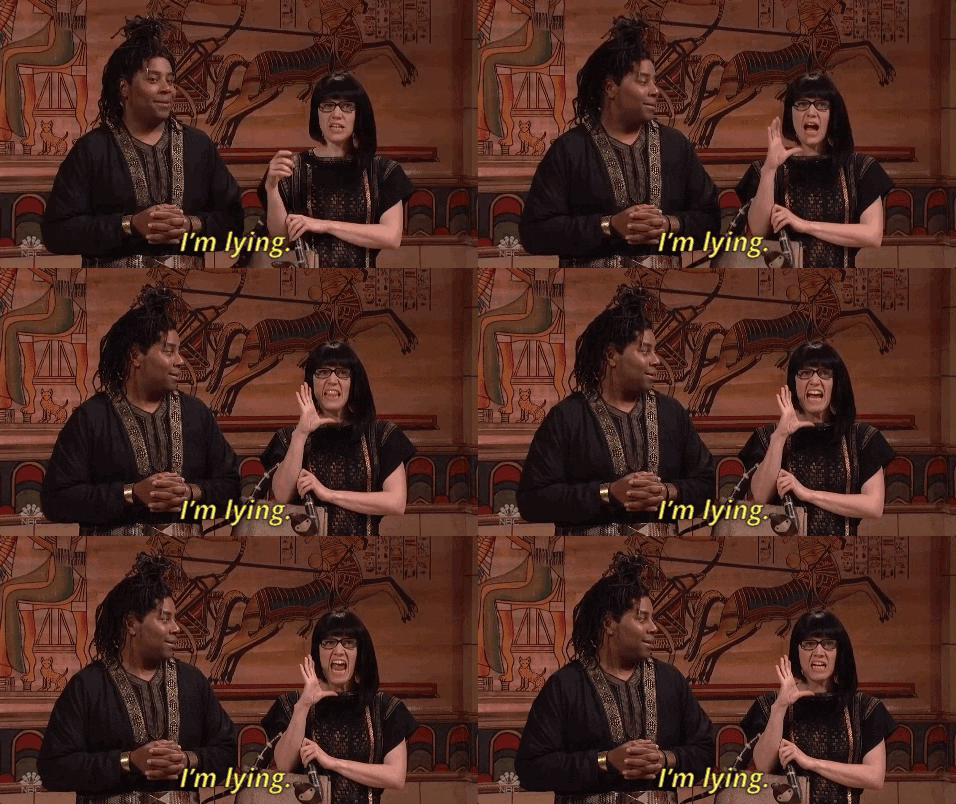
Adding subtext is one of the strongest ways to bring depth and dimension to a performance. People operate on multiple levels. We often say one thing while meaning another.
The clip above is layered with subtext. Matt LeBlanc's character appears to be talking about the script, but he's really talking about his relationship with her, and she's doing the same. The script becomes a safe proxy for what neither of them can say directly. That's where the scene gets interesting.
The Iceberg
The acting teacher in the clip explains the iceberg analogy: what we see and hear is only a small fraction of what's actually going on.
When you write a character bio, you're creating material to draw from history, wants, fears, and contradictions. All of that lives below the surface and fuels subtext. Characters rarely say exactly what they mean. Someone can say "I love you" and communicate resentment, control, fear, or detachment instead.
Scenes become compelling when meaning lives underneath the dialogue.
Flaws
Flaws are what make characters watchable. Perfection is flat. Humans hide feelings. They avoid confrontation. They cross boundaries. They carry agendas. They bring unresolved past experiences into every interaction.
Dig beneath the dialogue and ask:
What is the character protecting?
What are they avoiding?
What do they want that they can't say out loud?
Subtext lives in those gaps… in what's withheld, redirected, or disguised.
You can clearly restate the note in your own words
Your first pass already addresses the core concern
You ask fewer follow-up questions later in the process
Your work changes in the right direction, not just a direction
Notes get smaller instead of multiplying
Your timing improves before the polish begins
Leads and directors trust you with broader direction
You spend less time reworking and more time refining
Bottom line:
When you're truly listening, the work moves forward with less friction.
Ways Animators Kill Subtext Without Realizing It
Animating exactly what the dialogue says
Playing the emotion too clean or too literally
Overposing to "show the idea" instead of letting it leak out
Resolving the emotion instead of letting it sit uncomfortably
Making every thought readable instead of selective
Polishing mechanics before the intention is clear
Smoothing out asymmetry, hesitation, or conflict
Treating performance as motion rather than behavior
Gut check:
If the audience understands everything immediately, there may be no subtext left.