
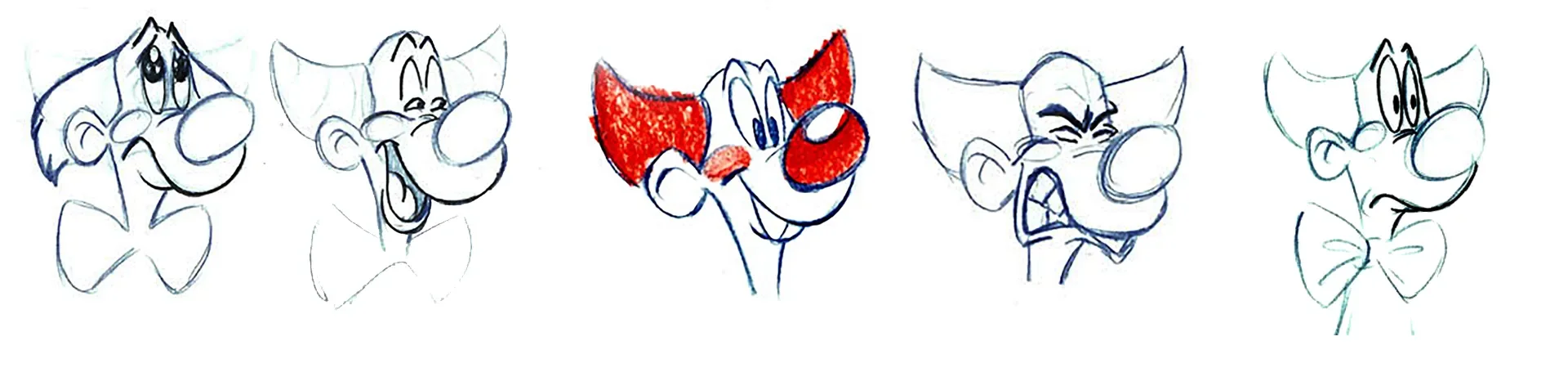
TWELVE RULES FOR FACIAL EXPRESSION
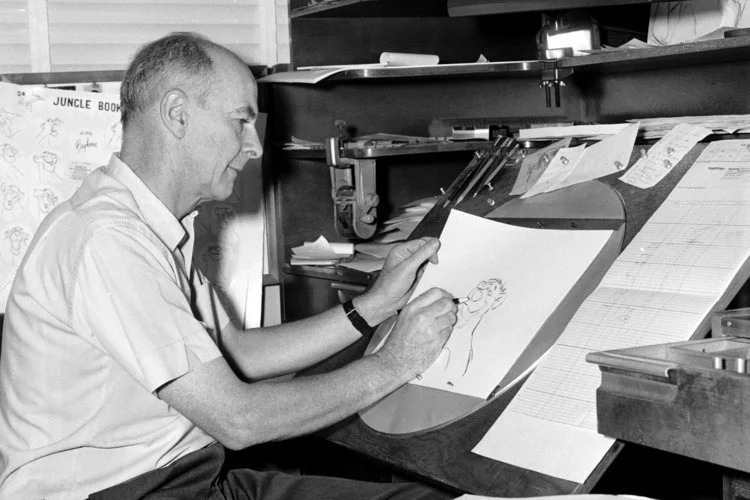
OLLIE JOHNSTON NOTES "Twelve Rules for Facial Expression"
Walt Disney animator Ollie Johnston works on a drawing for "The Jungle Book" in this August 1965 publicity photo released to Reuters on April 15, 2008. Johnston, the last of Walt Disney's original team of animators, known as the Nine Old Men, has died at the age of 95 in Sequim, Washington, a Walt Disney Co spokesman said on Tuesday.
Guidelines for showing the expression change:
(a) Avoid making a fast body move while changing the expression. (b) Change your expression before or after the body move. (c) Don't lose the expression change in an active secondary action. Eg, clothing catching up with body movement.
Don't try to tell too much in one drawing. Work out the idea over a series of drawings.
Don't let facial expressions conflict with dialogue: The idea behind the words should suggest expression.
Be sure you have the proper staging to show all the expression in your scene to best advantage:
Long Shot, medium shot, close-up.- Straight-on, 3/4, Bird’s eye, + Worm’s eye views.
Do you have the correct expression to show what your character is thinking? Are all the parts of the head & face related to this one idea?
The expression of the idea behind the words must be captured throughout the body, including the face. But remember: that expression originates in the eyes.
It is the change in the shape of the eyes that shows what the character is thinking. It is the thinking that gives the illusion of life.
Avoid looking up (worm's eye view) for a frown unless it is a sinister, domineering frown.
Don't hide a smile with the head tilted down too far, or behind a big nose or mustache.
Eyes in a close-up should move 3 FRS ahead of the accent.
In a blink, eyes should close 3-4 FRS ahead of the accent.
Always remember: in character Animation, all the different parts of the character's head, eyes, mouth, body & limbs, clothing -start & stop at other times, & move at different rates. This means you, the animator, must separate spacing charts for the various parts -for example, one for the eyes, one for the mouth, one for the eyebrows, etc., on keys. Bear in mind that the key for one part may also be an in-between for another part: in other words, the starts & stops for different actions will overlap.